Katherine Applegate was born in Michigan, a fact which allows her to pretend she is a hearty Midwesterner, even though she hates the cold. Katherine’s parents, a tolerant sort, allowed her to have many pets growing up, and she worked for a veterinarian in high school. She lived in Michigan, Illinois and Texas before graduating from The University of Texas at Austin with a degree in Aimlessness and a minor in Indecision.
Katherine worked as a plant waterer (killed them) and a cocktail waitress (spilled them) before realizing the world would be a safer place if she’d write books instead. Since then, she’s written over 150 books for children and young adults, many in collaboration with her husband, Michael Grant. Animorphs (Scholastic), their long-running series, sold over 35 million copies worldwide. They don’t collaborate much anymore, because they would like to remain married.
Katherine’s recent work includes a picture book, The Buffalo Storm (Clarion); an early chapter series, Roscoe Riley Rules (HarperCollins); YA thriller Eve and Adam (Feiwel andFriends / Macmillan), which she wrote with her husband, and Home of the Brave (Feiwel and Friends / Macmillan), which won the SCBWI 2008 Golden Kite Award for Best Fiction, the Bank Street 2008 Josette Frank Award, and was a SLJ Best Book of the Year.
In 2013, Katherine Applegate won the Newbery Medal for The One and Only Ivan (HarperCollins) which she was inspired to write after reading about the true story of a captive gorilla known as Ivan, the Shopping Mall Gorilla. The real Ivan lived alone in a tiny cage for twenty-seven years at a shopping mall before being moved to Zoo Atlanta, where he was a beloved celebrity. The One and Only Ivan has gone on to win numerous additional accolades including the Christopher Medal, an SCBWI Crystal Kite Award, a nomination for the E.B. White Read Aloud Award as well as appearing in the coveted #1 spot on the New York Times bestseller list.
She lives near San Francisco with her husband, two children, and an array of neurotic pets. You can follow her on Twitter, Goodreads, or visit her website.
Question Seven: What are your top three favorite books?
I understand that cheating is openly condoned for this question, so allow me to fine-tune: my top three children’s books this week are Charlotte's Web (E.B. White) No One is Going to Nashville (Mavis Jukes) Tuck Everlasting (Natalie Babbitt)
Question Six: How much time do you spend each week writing? Reading?
I aim for 2 hours a day writing and read as much as I can, whenever I can.
It’s so important to connect with work daily, if possible, even if it’s only for 5 minutes. I keep an article by Walter Mosley nearby to remind me of this. “Writing a novel is like gathering smoke,” he says. So true. http://www.nytimes.com/library/books/070300mosley-writing.html
Question Five: What was the path that led you to publication?
Path? You mean there’s an actual path? I need to update my GPS.
I took the longest, most circuitous route imaginable. Degree in liberal arts/English. Too many years waitressing (badly). Ghostwriting endless books. Girls who love horses. Horses who love girls. Sweet Valley Twins (Jessica was the evil twin.) Disney Aladdin, Little Mermaid, Mickey Mouse (the usual suspects).
Finally, my husband and I got up the nerve to write our own series, Animorphs. After some more series, I started to write single titles with a beginning, middle, and end.
It was blissful.
Question Four: Do you believe writers are born, taught or both? Which was true for you?
Both. Talent and training help. But honestly, tenacity is every bit as important. Question Three: What is your favorite thing about writing? What is your least favorite thing?
I adore rewriting. It’s like sculpting, with a keyboard instead of a chisel.
I hate the blank page. With a deep and abiding passion.
Question Two: What one bit of wisdom would you impart to an aspiring writer? (feel free to include as many other bits of wisdom as you like)
Ask yourself why you want to be a writer. Is it because you love words and stories? Because you want to leave a legacy behind? Because you long to connect with others?
It’s important, I think, to separate the act of writing from the act of publishing. They are two different things, and require different skill sets.
In the end, if you’re meant to be a writer, you’ll find you can’t give it up, despite your best efforts.
Question One: If you could have lunch with any writer, living or dead, who would it be? Why?
Jane Goodall. I want to be her when I grow up.
If Jane’s unavailable, E.B. White would be delightful, I’m guessing. Like me, he was an introvert. We’d probably just sit in the barn and watch the pigs in silence.
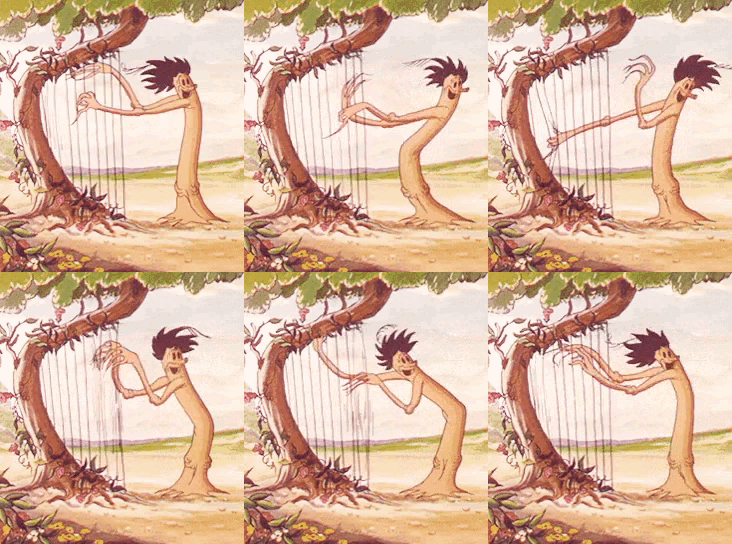
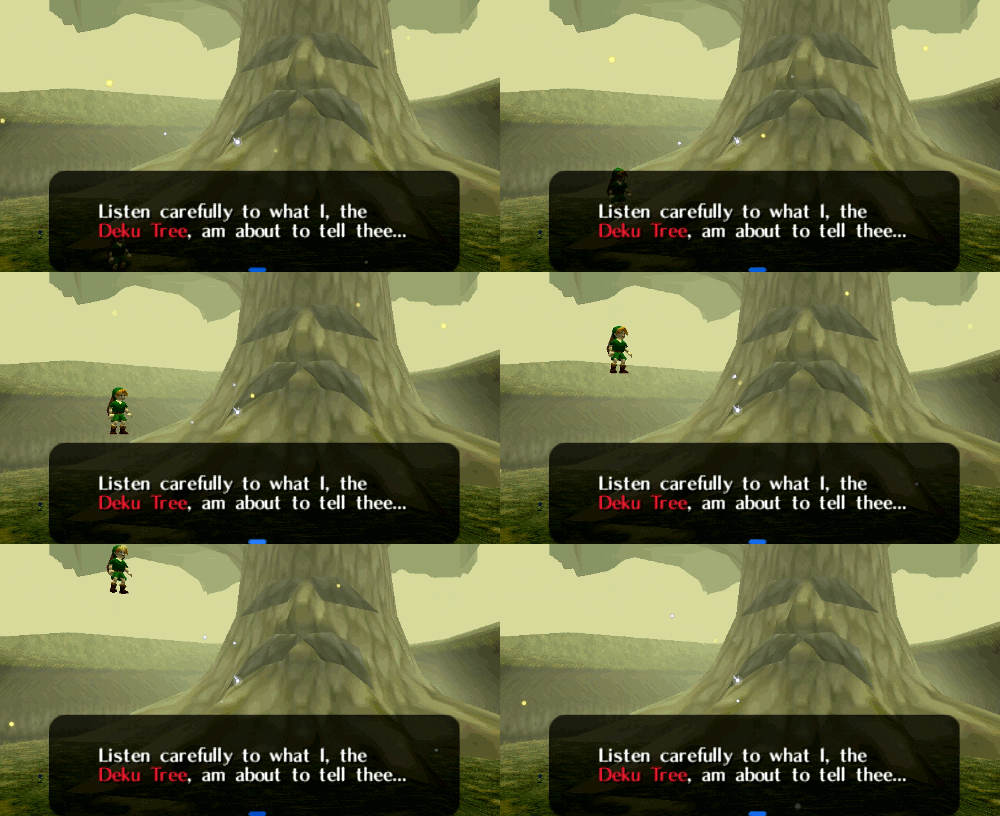
First Paragraph(s):It’s hard to talk to trees. We’re not big on chitchat. That’s not to say we can’t do amazing things, things you’ll probably never do. Cradle downy owlets. Steady flimsy tree forts. Photosynthesize. But talk to people? Not so much. And just try to get a tree to tell a good joke. Trees do talk to some folks, the ones we know we can trust. We talk to daredevil squirrels. We talk to hardworking worms. We talk to flashy butterflies and bashful moths. Birds? They’re delightful. Frogs? Grumpy, but good-hearted. Snakes? Terrible gossips. Trees? Never met a tree I didn’t like. Well, okay. There’s that sycamore down at the corner. Yakkity-yakkity-yak, that one. So do we ever talk to people? Actually talk, that most people-y of people skills? Good question. Trees have a rather complicated relationship with people, after all. One minute you’re hugging us. The next minute you’re turning us into tables and tongue depressors.
What a treat we're in for this week, Esteemed Reader, as we'll have Katherine Applegate here on Wednesday to face the 7 Questions. Really? I hear you asking. The same month we've already had Kate DiCamillo!?! Could one blog truly be that amazingly awesome!?! One blog could, Esteemed Reader. One blog could:)
Did you love The One and Only Ivan, Esteemed Reader? Of course, you did! Everybody did! It sold all the copies and won a Newbery and we're all looking forward to the movie. Grown-ups have wiped tears from their eyes while telling me of their love for that book. If I were Katherine Applegate (one day, Esteemed Reader, one day), I would probably drop the mic in a most epic fashion and never publish another book. So I think Applegate deserves a round of applause just for being brave enough to publish a follow up novel and now a second (if I were a betting man, I'd say there's likely to be a third).
So is Wishtree as good as The One and Only Ivan? Don't be a jerk, Esteemed Reader. Why would you even ask that? But yes, yes it is:)
Wishtree is a wonderful read that made me laugh many, many times before the end. There's all sorts of amazing craft technique on display that makes this a must-read for writers. More, this is the sort of book I would be happy to place in the hands of any reader with the proud glow of having found something you're really going to enjoy.
Here's what I like about Applegate (having never met her): she's a writer. She's not somebody who spent 20 years tinkering on one novel, published it to huge acclaim and success, and then spent another 20 years working on the follow-up. A search for her books brings up over 50 titles, and that's probably a conservative number. That's inspiring stuff, Esteemed Reader. While I'm playing the new Assassin's Creed Friday (killing pixels in Egypt y'all!), she's going to be writing another book. I'd guess if you gave Applegate no money, no Newberies (yep, that's how I'm doing the plural form), or any other swell perks, but you did promise readers, she'd keep writing.
Wishtree is very much a writer's book as the very premise feels like an imposed challenge; like maybe Applegate lost a bet or something:) If any other writer sent me a book for review in which the protagonist was a tree, I'd say "hard pass." In this case, I sought this book out because I genuinely wanted to see if Applegate could pull off a full novel written from the perspective of a tree (if any writer could, she could).
And Applegate openly acknowledges the problem from the start:
“I’m passive. I just sit here watching the world.” “You’re a tree, Red. That’s kind of the job description.”
So how the heck is a tree supposed to be a proactive character? The answer, of course, is that Applegate personifies the tree and endows it (she makes a point to tell us this tree is sexless) with qualities real trees presumably do not have. Is that cheating? I don't know, I wasn't there to hear the parameters of the bet she lost:)
The premise of this story is that our tree can talk as can other animals, but they never talk to humans (usually), for their own safety and because it's the rule. It's not quite clear what the consequences of breaking this one rule are, but it's not good.
So let's talk about this tree:
Name’s Red, by the way. Maybe we’ve met? Oak tree near the elementary school? Big, but not too? Sweet shade in the summer, fine color in the fall? I am proud to say that I’m a northern red oak, also known as Quercus rubra. Red oaks are one of the most common trees in North America. In my neighborhood alone, hundreds upon hundreds of us are weaving our roots into the soil like knitters on a mission. You might be surprised to learn that all red oaks are named Red. Likewise, all sugar maples are called Sugar. All junipers are called Juniper. And all boojum trees are called Boojum. That’s how it is in tree world. We don’t need names to tell one another apart. Imagine a classroom where every child is named Melvin. Imagine the poor teacher trying to take attendance each morning. It’s a good thing trees don’t go to school. Of course, there are exceptions to the name rule. Somewhere in Los Angeles there’s a palm tree who insists on being called Karma, but you know how Californians can be.
Applegate has a lot of fun with names in this book. Red has many animal friends who live in its hollows. All of them are personified as well, though their personalities and actions are shaped by their animal characteristics, as they would be. And their names are consistently hysterical.
There's a skunk named FreshBakedBread, raccoon babies named You, You, and You, an Opossum named HairySpiders, and on and on, because each species of animal has their own method for determining names:
Many crows opt for sounds they’re fond of making. (Crows are excellent mimics.) I’ve met crows named WindChime, EighteenWheeler, and GrouchyCabDriver, not to mention a few others that are not appropriate for polite company.
My favorite character by far is Red's best friend, a crow named Bongo. Bongo likes to untie the shoes of children so she can steel their lunches while they're retying them. She's also very fond of leaving large "deposits" on the heads of humans who mess with animals and trees.
Bongo is a ride-or-die bird that is an extremely active character to counterpoint Red's mostly passive nature (because even personified, a tree is still stationary). Bongo also routinely gives Red a hard time for playing into the wise old tree cliché :
“I really think you should all calm down,” I interrupted. “Let’s not buy trouble. One day at a time, my friends. Who knows what tomorrow may bring?” The mothers glared at me. I heard a great deal of sighing. “Too much Wise Old Tree?” I asked. “Too much Wise Old Tree,” Bongo confirmed, as everyone retreated into their homes in a huff. “They’re all a bit tense,” Bongo said. “Worried about your … your situation.” “I can see that.” “I’m worried, too,” Bongo said in an almost-whisper. “I know,” I said gently. “But every cloud has a silver—” “Red,” Bongo interrupted. “Sorry.” “There must be something I can do,” Bongo said. “You’re a good friend, Bongo. But sometimes all you can do is stand tall and reach deep.” “Red!” “Sorry,” I said again.
I had a college professor once point out to me that the reason Celie works as a protagonist in The Color Purple, despite her passiveness for so much of the book (lots of bad stuff happens to her without her doing much in response for years) is because she's paired up with Shug Avery and Sophia, who are both so active and aggressive they carry much of the protagonist's responsibilities until Ceili is ready to go all Spielbergian table-pounding and become an active character very late in her story.
As you know, Esteemed Reader, I routinely offer blurbs to publishers free of charge. So if the folks at Feiwell and Friends are looking for something snappy to slap on the cover of Wishtree for future editions, I offer up this gem:
"Katherine Applegate has written The Color Purple of talking tree stories." --Middle Grade Ninja
I'm cracking myself up today, but it is genuinely important that Red is surrounded by so many animals that can act on her behalf. And these Book of the Week reviews are typically less about the book and more about what we writers can take away from the author's use of technique. Something we should absolutely take away from Wishtree is techniques in which to make a necessarily somewhat passive character active.
Another trick is to put the character in an interesting setting where interesting things will happen around the passive character. Out of all the trees Applegate could tell us a story about, she's chosen one that's planted where some action is naturally going to happen because Red is a wishtree, which I didn't even know was a thing until I read this book:
Every year on the first day of May, people come from all over town to adorn me with scraps of paper, tags, bits of fabric, snippets of yarn, and the occasional gym sock. Each offering represents a dream, a desire, a longing. It’s an honor, all the hopes bestowed upon my tired old limbs. Although by the end of May Day, I look like someone dumped a huge basket of trash on top of me.
By virtue of human tradition, Red is in a position to interact with humans rather intimately. Red is also in a position where all of the human characters in the story are likely to converge at least twice a year, and you can bet that's going to be important right around the climax of the story.
Ultimately, a story about trees, animals, or any other nonhuman character is a story written for humans. And humans are interested in humans. It's just how we are. So an author can either endow her nonhuman characters with human characteristics and problems humans can relate to, or directly involve them in human affairs. Applegate does both.
The community of humans around Red is behaving strangely: Other things happened. Someone threw raw eggs at the blue house. One afternoon, a car passed by, filled with angry men yelling angry things, things like “Muslims, get out!” Sometimes Samar would walk home trailed by children taunting her. I love people dearly. And yet. Two hundred and sixteen rings, and I still haven’t figured them out.
I'm sure other reviews will focus on this aspect on the novel, as they should, but this review is already long and I've got something else I want to talk about. Plus, although a certain racist reality television star is never directly mentioned, it's pretty clear some of the folks in this story voted for President "Many Sides" and that they're part of the rise of Death Eaters in America. Fair enough. Children are living through these dark days as surely as the rest of us. But I have a hard enough time reading the news on a daily basis, so I don't want to devote my discussion of a talking tree book to the last angry buzzing of white supremacist wasps before winter we're currently living through in the United States.
Here's what relevant for our discussion: the problem of racism is not solved in this story, but a solution is discussed. Although Red is passive through the first part of the story, before the end, our heroic tree does take action that impacts the story as a protagonist must in order to qualify as the protagonist.
I don't want to spoil the book, but if the conceit of Wishtree is that trees can talk, but as a rule don't, you can imagine what unthinkable thing Red might do before the tale's end. In fact, the rules of storytelling demand Red do this thing. Red has been around longer than its human counterparts and knows a few things about human nature worth listening to.
And don't let my mention of politics put you off. The focus of Wishtree is on the two lonely children who need friends despite the conflict of their parents and their country, as well as the animals who want to save Red from being cut down. These separate conflicts merge in a big finale that involves my favorite human character's reaction to animals working together of all time:
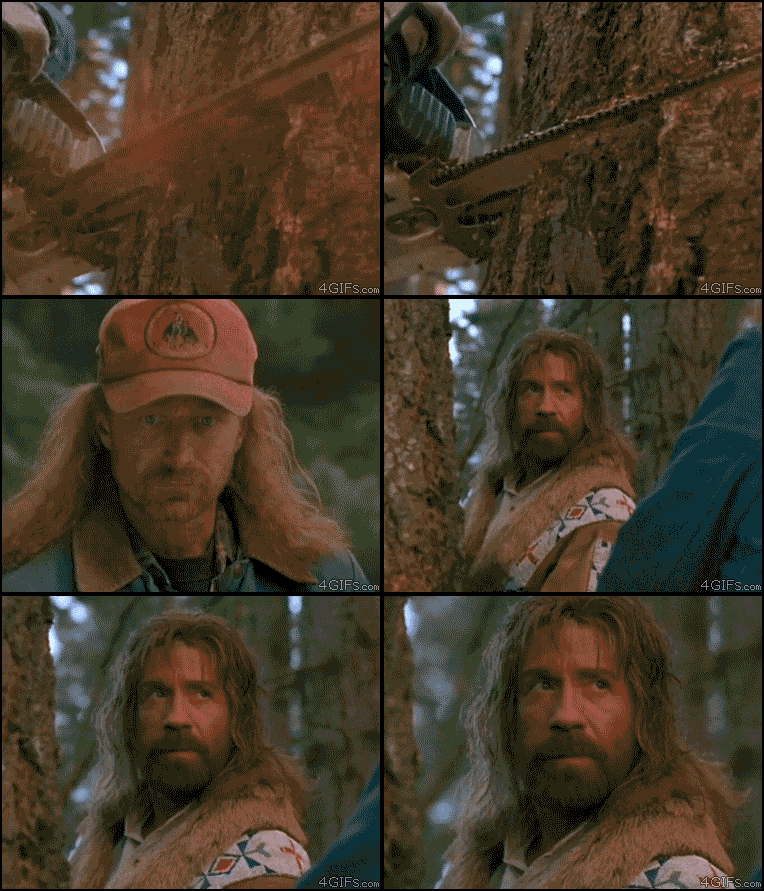
One of the tree cutters took off his helmet and scratched his head. “This just don’t happen,” he said to Dave. “Those animals oughta be eating each other.” “It’s some kinda crazy critter miracle,” said another worker. He pulled out his smartphone. “This is going on Facebook.”
That's about going to do it, except for one other thing. Wishtree is absolutely a story about a tree and its family of animals pulling together to overcome adversity, which is classic middle grade territory. It's also about racism and other ism's that divide our communities and the ways individual humans can overcome this weakness.
But don't be fooled, Esteemed Reader. Wishtree is also an examination of mortality and the end of existence that awaits us all, which is an unusual treat in a middle grade story.
This is the kind of thing that's easier to chat about when it's happening to a tree, but remember, this is a tree with many human qualities. Don't be thrown off by the metaphor. We're not just discussing a tree that's scheduled to be chopped down:
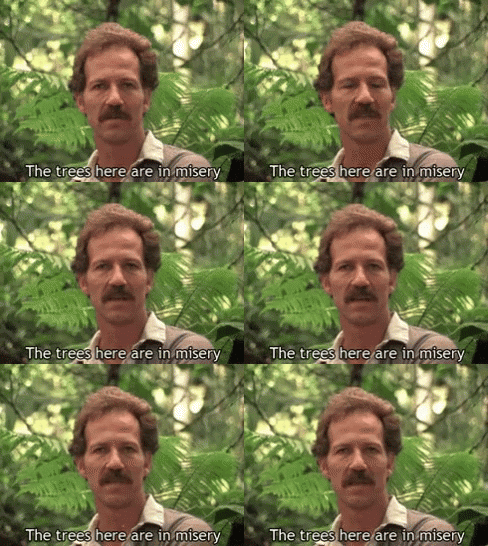
I was in the midst of a conversation with Bongo, who had just pointed out to me that I was a year older. Two hundred and sixteen rings old, to be precise. “Another sproutday,” I said. “I still feel like a sapling.” “You don’t look a day over a hundred and fifty,” Bongo replied. “Best-looking tree on the block.” “I’m really”—I paused for comic effect—“getting up there.” I wondered, too, if I’d done enough for the world I loved. It was something I’d asked myself before. But impending death has a way of focusing your attention. I didn’t want to leave the world I loved so much. I wanted to meet next spring’s owl nestlings. I wanted to praise the new maple sapling across the street when it blushed red as sunset. I wanted my roots to journey farther, my branches to reach higher. But that is how it is when you love life. And I could accept that if my time had come, it had come. After a life as fine as mine, who was I to complain? The end of my story was coming. Well, it had been a beautiful story. How lucky was I to have seen a day like today?
It's sobering stuff, Esteemed Reader. Don't let anybody tell you this is just a talking tree story. And don't ever let anyone convince you that middle grade fiction can't be used to discuss the entire spectrum of the human experience.
Red never hints at an afterlife for trees or finds some other means of flinching. This is a stark look at the predicament we who are alive and know one day we won't be find ourselves in. Through Red, Applegate gives us a philosophical take on death that is perhaps useful to be read by non-tree entities.
And that's were we'll leave it for today, Esteemed Reader. Make sure you come back Wednesday when we'll have Katherine Applegate here, assuming she's not ticked that I speculated her hard-labored and much-loved novel is the result of a lost bet:) As always, I'll leave you with some of my favorite passages from Wishtree:
Over the years, I’ve learned that botanists—those lucky souls who study the lives of plants all day—call some trees, such as hollies and willows, “dioecious,” which means they have separate male and female trees. Lots of other trees, like me, are called “monoecious.” That’s just a fancy way of saying that on the same plant you’ll find separate male and female flowers. It is also evidence that trees have far more interesting lives than you sometimes give us credit for. In Stephen’s eyes, in the way he’d looked at Samar that afternoon, I saw something I’d seen many times before. A wish. “Here’s an idea for you: Ideas are a bad idea,” said Bongo. In the silence that followed, I felt as if the whole world was holding its breath. I’d broken the rule. Stephen and Samar still stared open-mouthed at me. They looked as rooted to the ground as I was. One creature’s nastiness is another creature’s nibble. Each cat was wearing an embarrassingly sparkly harness.
STANDARD DISCLAIMER: All reviews here will be written to highlight a book’s positive qualities. It is my policy that if I don’t have something nice to say online, I won’t say anything at all (usually). I’ll leave you to discover the negative qualities of each week’s book on your own.