David Ezra Sein and I discuss his career in picture
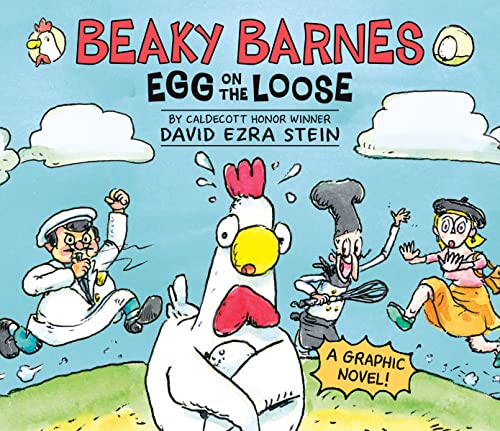
books and now graphic novels, such as his newest, BEAKY BARNES: EGG ON THE
LOOSE. We talk about adapting his INTERUPTING CHICKEN series as an Apple TV
series, why I own three copies of POUCH, his childhood influences, why he
walked away from a contract with Harper Collins while still in college, a UFO
sighting, walking with an idea and getting to know it, puppetry, and so much
more.
David Ezra Stein is the Caldecott-Honor illustrator and author of INTERRUPTING CHICKEN, DINOSAUR KISSES, I'M MY OWN DOG, and many other award-winning picture books, including LEAVES, winner of an Ezra Jack Keats New Writer Award. He lives in Kew Gardens, New York.
Caldecott Honor winner David Ezra Stein takes readers on a slapstick journey in his debut graphic novel series, featuring Beaky Barnes, a no-nonsense chicken who's determined to save her desirable egg. But with a hungry inspector, a desperate chef, and an entrepreneurial woman on her tail, Beaky has to use every tool in her chicken coop to make her grand escape.
All the inspector wanted was an egg to go in his sandwich, so he heads to the cafe. The problem? The town is entirely out of eggs, and the local chef is panicked. Luckily, he spots a lovely duo having lunch: a woman and a chicken named Beaky Barnes. It's his lucky day. But when the woman and Beaky have a fight over an offensive business arrangement (chicken-pulled coach service, anyone?), chaos ensues. With a chicken on the run, and an inspector and woman in hot pursuit, three stories emerge with hilarious results!
With laugh-out-loud madcap comedy on every page, David Ezra Stein's (Caldecott Honor winner of Interrupting Chicken) signature humor is on full display in this debut graphic novel!
Rachel Orr and I chat about her career in publishing from her time as a bookseller with Barnes and Noble, her time as an editor with Harper Collins, and her current role as a literary agent with Prospect Agency. We talk about her love of reading, writing, and agenting, all of which she frequently does while cooking. We also discuss the types of projects she’s looking to represent, some advice on how to answer Query Manager questions, the author/agent relationship, increasing diversity in traditional publishing, a ghostly ladder, and so much more.
Rachel Orr represents both authors and illustrators on a wide range of projects—from picture books to YA, both fiction and non-fiction. She joined Prospect Agency in 2007, after eight years working for HarperCollins Children’s Books, and brings her editorial experience to her clients’ work. Rachel enjoys cooking Chinese food, watching “Homeland”, and taking public transportation. She lives in New Jersey with her husband and two young children. You can follow her on Twitter @rachelprospect.
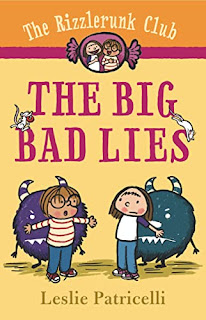
Leslie Patricelli and I discuss her career writing and illustrating board books and her recent middle grade novels in THE RIZZLERUNK CLUB series, BEST BUDS UNDER FROGS and THE BIG BAD LIES. We talk about her time designing for Microsoft, self-publishing a book in 1993, her approach to illustrating her books for older readers with ink vs painting her picture books, our mutual love for Stephen King, the difficulty of scheduling, the necessity of deadlines, ghosts walking up walls, and so much more.
Leslie Patricelli lives in the mountain town of Hailey, Idaho with her husband, Jason, her daughter Tatum, three cats and a devoted, stick-loving dog. Of the many outdoor activities she loves doing in the mountains, skiing untracked powder and mountain biking during wildflower season are at the top of the list. Her son, Beck, is living and playing music in Brooklyn, NY, and her daughter, Tia, is majoring in environmental studies at University of Washington. Her husband is a drummer, music engineer, ski instructor, and her on-request editor.
When a little lie turns into a more serious one, will Lily and Darby’s friendship survive—or is it the end of the Rizzlerunk Club?
Lily Lattuga finally feels settled after moving to a new town and starting the fourth grade at a new school. She gets to live right across the lake from her best friend, Darby, who loves frogs and drawing just as much as Lily does. They even have their own club: the Rizzlerunks. But then things start going wrong: the new boy in class is a liar and a bully, and Darby begins acting strangely—she even breaks the Rizzlerunk pledge of honesty and gets Lily into trouble! And when something bad happens to one of the classroom rats on Lily’s watch, Lily finds herself caught in a lie with no clear way out. She realizes a little lie can snowball into a huge one that sucks in every good feeling and hurts others terribly. What’s a Rizzlerunk to do? Humorous, heartfelt, and full of illustrations that bring Lily’s charmingly candid voice to life, this second book in the Rizzlerunk Club series will resonate with anybody who has ever found it hard to do the right thing.
David LaRochelle and Mike Wohnoutka join me to discuss their collaboration from its start to how it remains successful, and their newest picture book, SEE THE CAT. We discuss the very different paths they took to publication, the difference in a writer’s workday versus an illustrator’s workday, the difference winning an award makes, school visits, professional pumpkin carving, a contest-winning supermarket run, and so much more.
David LaRochelle has been creating books for young people for over twenty-five years. His many picture book titles include The Best Pet of All, How Martha Saved Her Parents from Green Beans, and Moo!
He is the recipient of the Sid Fleischman Humor Award, multiple children’s choice awards, and a three-time winner of the Minnesota Book Award.
A former elementary school teacher, David still visits many classrooms around the Midwest (and world!) each year, talking with students about books, writing, and illustrating. When he is not creating new books, he loves to read, play board games, and carve unique jack-o’-lanterns, which you can view at his website davidlarochelle.com.
Ever since Mike can remember he knew he wanted to be an artist. His dad, who worked at the Highway Department, would bring home reams of paper that had highway plans on one side and were blank on the other. He would be so excited to have all that paper to draw on and would fill each sheet with snowmobiles, baseball players, superheroes—everything he was interested in. His high school art teacher, Mr. Chase encouraged Mike to pursue art as a career. This, along with a scholarship, led him to the Savannah College of Art and Design in Savannah, Georgia. Since graduating with a B.F.A. in Illustration, Mike has illustrated over 30 books for children. He has worked with various clients including Bloomsbury Publishing, Candlewick Press, Henry Holt, Clarion Books, Disney-Hyperion Books, Holiday House, Scholastic Books, Penguin-Random House, Cricket Magazine Group, General Mills, 3M, Medtronic, and Peaceable Kingdom Press.
A native of Spicer, Minnesota, Mike currently lives with his family in Minneapolis.
Winner of the 2021 Theodor Seuss Geisel Award Move over, Spot. . . . Spoofing classic primers, Max the Dog talks back to the book in a twist that will have fans of funny early readers howling.
See Max. Max is not a cat—Max is a dog. But much to Max’s dismay, the book keeps instructing readers to “see the cat.” How can Max get through to the book that he is a DOG? In a trio of stories for beginning readers, author David LaRochelle introduces the excitable Max, who lets the book know in irresistibly emphatic dialogue that the text is not to his liking. Illustrator Mike Wohnoutka hilariously depicts the pup’s reactions to the narrator and to the wacky cast of characters who upend Max’s—and readers’—expectations as the three stories build to an immensely satisfying conclusion. Hooray, Max, hooray!
Angie Karcher and I talk quite a bit about writers conferences, specifically how to get the most out of them and things writers shouldn’t do when attending one. Who better to discuss conferences with than the Indiana Regional Advisor for the Society of Children’s Book Writers and Illustrators who also hosts her own writers conference? We also discuss rhyming picture books and writing about local Hoosier history, including the infamous Grey Lady ghost of Willard Library.
Angie Karcher is a former Kindergarten teacher, Developmental Therapist and children’s author of WHERE THE RIVER GRINS 2012, M.T. Publishing, THE LEGENDARY R.A. COWBOY JONES 2014 M.T. Publishing and SANTA’S GIFT 2017 M.T. Publishing.
Her poetry is included in AN INDIANA TRIBUTE BICENTENNIAL ANTHOLOGY, compiled by Byron Buckley 2017.
She has two upcoming titles: SIDELINE SLUGGER, M.T. Publishing, May 2018 and THE SIGNATURE SHIP, M.T. Publishing, October 2018.
Angie is the creator of Rhyme Revolution. This annual event held in April, is a writing challenge on her blog for children’s authors. She has a passion for writing rhyming picture books and poetry and encourages educators and parents to read rhyme frequently to children. Rhyme encourages language development and fosters a love of reading.
Angie is the founder of The Rhyme Revolution Conference, held first in New York City in December 2015 and next in New Harmony, Indiana, October 2018. This conference supports and encourages children’s writers to use proper picture book writing techniques, as well as applying perfect meter and rhyme.
Angie also founded and hosts The Best in Rhyme Award, announced annually in February in New York City, NY, naming the best rhyming picture book and several honor books each year.
Her most recent endeavor is hosting Ms. Angie’s Craft Corner for KidLitTV. This will be a monthly recorded segment where she shares simple crafts for kids, teachers, parents and librarians that accompany her favorite picture books.
Angie frequently presents at schools, libraries, bookstores and writing conferences. She is the Indiana SCBWI Regional Advisor and lives in Evansville, Indiana with her husband and four teenage children. Her beloved beagle Gracie and Miniature Dachshund Lucy are her constant assistants.
Angie is represented by Victoria Selvaggio with Storm Literary Agency.
Once upon a time a 35 foot tall Santa stood at the edge of town waving his mitten to all the good boys and girls as they left home or returned from out of town, smiling a hello or goodbye. He was a beloved landmark with his red suit and blue eyes. After 20 years of wishing safe travels to those that passed by, his bright red suit had faded, his beard had become chipped, and he had lost the twinkle in his eyes. Then one day… Santa disappeared.
Santa had been hauled off to a junkyard where he lay, face-down and forgotten. One day a local resident found Santa and decided to “Stand Santa Back Up.”
Santa’s Gift is the story of how a community came together to save a beloved landmark, restoring him back to his original jolly self and finding him a new home where he once again can wave safe travels to all that pass by.
SANTA’S GIFT is a book for the young and young at heart. It is a great story to share with your children or grandchildren and will include documentation of the restoration of Evansville, Indiana’s Santa statue. Do not delay – Order your copies TODAY!
A portion of the proceeds will go to support and sustain this historical landmark! Many thanks to Ron McKeethen for finding and saving Santa!
We write children’s
picture books about an elementary school-aged boy and his marvelous pet weasel.
Often we are asked—understandably so—for what age groups our fun little
episodes are intended. The answer: children between four and ten years old and
the adults who read with them. But the deeper truth: anyone and everyone.
Humans love a good story
and are not always picky about the source. In the pursuit of meaningful
entertainment, boundaries between story formats rarely seem to matter.
Storytelling method becomes secondary if the story is strong and the characters
speak to the audience. And, if done right, a picture book can have the similar
effect as a comic or graphic novel--both of which are widely read by readers of
chapter books.
Also, it certainly helps to be funny. In Wild Wild Weasel, our second adventure in the World of the Weasel book series,
the boy imagines all sorts of things he can train his pet weasel to do, from
chauffeuring the boy around to shampooing the boy’s hair. Laughter knows no
age.
In addition, it helps to
include words that the child may not know but will come to learn and use in
later years. “Pandemonium” and “rambunctious” may not roll trippingly off the
tongue of the average first grader, but in Once Upon a Weasel, our first
book, we wanted to include words that would be fun for the parent to say to the
child and also make the child curious about their meaning.
And it helps to create a
complex story where new details are revealed with each reading. In Wild Wild
Weasel, some visuals may very well escape notice upon first glance—a pigeon
holding a diploma in its beak, a bunny stuck in window blinds, an astounded
fish lifting itself onto the edge of its bowl to get a better look at the
action. (And, as you read all of our books, look for one particular little girl
who simply cannot seem to stay awake.)
Middle-grade readers
then have an opportunity to laugh, learn, teach, and discover. We think that’s
golden, and we hear from plenty of young people who agree!
All of these things we have been
learning since we first decided to write kids stories. And we continue to check
ourselves to make sure that the story is trim and that every word tells. Our
first drafts always contain too many words, which is often the case for any writing
project. But for picture books especially, each word is carefully considered.
By the time illustrator Dave Leonard gets to work it becomes clear that many of
our story points come across better in illustration. Thus begins another round
of culling words. (We always knew a picture was worth a thousand words, but
that old idiom was never so profoundly felt until we began creating picture
books.) Sometimes we describe too much, or grip the reader’s hand too tightly
as we lead them down an obvious road, or try to make things overtly Meaningful
with a capital M. The end product, we hope, is a balance between showing and
telling.
Indeed, we are learning. Trust the
reader and let them discover things on their own. If they don’t grasp
everything at first, they will when they reread the book years later. And
they’ll feel good about the discovery.
In the end, we as a
creative team don’t really have the middle-school student or the adult or even
the four-year-old in mind when we write. To us, the age of the reader is
immaterial. After all, adults go to see animated films geared toward the
younger set. Why shouldn't tweens and teens read picture books? We simply tell
a story that entertains us. Then we hope that people of all ages like it—you
too!
Salvo
Lavis is a writer and producer who has worked in
digital, video, print, and radio. He established the online brand for indie
film distributor Cohen Media Group, where he directed social media Oscar
campaigns for the Academy Award-nominated films Timbuktu and Mustang.
He has also produced content for Disney.com, Yahoo! Entertainment, and Live
Nation. His personal interests include math, science, and design. Salvo is from
Houston and lives in Los Angeles, California.
James
Munn is a freelance writer, film historian and
former editor at Architectural Digest. In addition, he and his friends
Salvo Lavis and Dave Leonard have created the World of the Weasel series of
children’s books, which includes the titles Once Upon a Weasel and Wild
Wild Weasel. He is the author of This Is No Dream: Making Rosemary’s
Baby and recently edited Autobiography of a Magazine: 1920 – 2010,
an illustrated history of Architectural Digest by former editor-in-chief
Paige Rense. James grew up in rural Nebraska and currently lives in Hollywood,
California.
WORLD OF THE WEASELpresents
picture books about a young boy and his pet weasel who injects excitement into
the boy’s quiet life and helps stimulate his imagination. Published by Spitball
Studio, the series currently has two books available with more to follow.
There’s also handmade plush dolls as well as fun t-shirts for adults and kids.
It’s National Poetry Month! Which is very exciting if you’re
a poet or a lover of poetry. And probably doesn’t interest you at all if you
consider yourself to be neither.
But if you’re a reader…and certainly a writer…you should be
celebrating too! Poems can amaze, invoke, inform, and impress. Bonus: they’re
often short enough to devour in a single bite, so investing time into one isn’t
a huge commitment.
April is the perfect time to try your hand at writing a
poem. But you’re not a poet, you say? Well, nobody is anything until they
actually try. So stretch yourself. Write a poem. Here’s one fast and easy way
to do it.
1.Observe.
Sit and watch a squirrel on your deck or a flower in the wind or a shark
swimming on youtube. (Because watching a shark swimming in the water next to
you might end this activity right here.)
2. Take
notes on what you’re seeing. Not AP-Chemistry-study-for-final kind of notes but
more like jotting down random thoughts that pop into your head while you’re
watching. Words like scurry or slinky or sitting or seaweed. Or they may not
even start with an s at all.
3. If you’re drawing a blank on what to write down,
here are some ideas to get you started: make a list of verbs. Every verb that
pops into your head while observing your subject. What colors do you see and what
do they remind you of? Write down two scary things about the scene in front of
you.
4. Go away.
5. Come back later to your notes. Read over them. Circle
anything you like. See the beginnings of a poem somewhere? If yes, go to step
6. If no, go back to step 1 and repeat again with something different.
6. Take the stuff you like and play with it. Sometimes
you can play with it by sound. Alliteration or rhyme is a good place to start.
Sometimes you can play with the shape of the phrases. Concrete poems take the
shape of the thing you’re writing about.Sometimes you can play with it by metaphor. Maybe you thought that leaf
looked old and wrinkled and full of veins and that makes you think of your
grandmother’s hands and that time she taught you to make apple fritters. Go
with that.
7. Just write. Free write some more stuff on the page in
front of you and see where it leads you.
8. Trim it into a poem. Poems pack a punch. Every word
counts. Do you need all those words you have? Can you trim some to make the
lines more potent? Can you find even stronger or better words for what you’re
saying?
9. Think about line breaks. The first word and the last
word of the line are powerful. You can also use line breaks to build suspense.
10. Read it aloud. Do you notice any sounds you can
capitalize on? Any places you can trim to make it more potent?
That’s it! And come on, that didn’t take long. Surely you
can spare an hour or two this month to stretch your brain in a new and fun way.
Now—don’t forget to go read some poems! If you aren’t going
to trek to the library to peruse the shelves, how about just clicking this.
Or this.
See? Poetry is cool. I told you.
Happy National Poetry Month!
Skila Brown is the author of verse novels Caminar and To Stay Alive, as well as the picture book Slickety Quick: Poems About Sharks, all with Candlewick Press. She
received an MFA from Vermont College of Fine Arts. She grew up in Kentucky and
Tennessee and now lives in Indiana where she writes books for readers of all
ages.
Fourteen shark species, from the utterly terrifying to the
surprisingly docile, glide through the pages of this vibrantly illustrated,
poetic picture book.
From the enormous whale shark to the legendary great white
to the enigmatic goblin shark to the small cookie-cutter shark, Slickety Quick
is a delightful frenzy of shark mayhem. Mysterious species such as the
camouflaged wobbegong and the elusive frilled shark share the waters with
better-known blue and nurse sharks, each commemorated in a poem by Skila Brown
and illustrated by Bob Kolar. Sneaky shark facts ripple through each spread to
further inform the brave and curious young reader intrigued by the power — and
danger — of these amazing creatures.
These concrete poems about a selection of sharks will tickle
the fins of many an aspiring marine biologist.
—Booklist
All in all, it’s a book that ought to leave many readers
fascinated—and perhaps a little unsettled—by the diversity of sharks that exist
beneath the waves.
—Publishers Weekly
An inviting format to spark shark discussions.
—Kirkus Reviews
Man, do I love me some poems about sharks! ***kisses fingertips to saver the sweetness***
Award-winning children's author and illustrator David Ezra Stein was born in Brooklyn, NY. By the time he was three, he was asking adults, "Wanna come to my room? Read books?" This love of reading grew into a love of telling stories, and then, writing. David Ezra Stein’s Interrupting Chicken was awarded a 2011 Caldecott Honor, as well as many state awards. His picture book Leaves won the Ezra Jack Keats award and was a Publishers Weekly Best Book of the Year, a Kirkus Reviews Editor’s Choice, and a School Library Journal Best Book. Booklist called his book Monster Hug! “a cousin to Maurice Sendak’s Where the Wild Things Are.” Pouch! (Putnam), was a 2010 Charlotte Zolotow Honor Book. His books have been translated into Chinese, Korean, Japanese, Spanish, French, and Finnish. Click here to read my review of Pouch. And now David Ezra Stein faces the 7 Questions:
Question Seven: What are your top three favorite books? Top-of-the-head three: Lord of the Rings (counting as one work), The Mouse and the Motorcycle, Watership Down. Question Six: How much time do you spend each week writing? Reading? Nowadays, Writing?…maybe ten hours. Reading?…maybe three hours. Wow, that doesn't seem like a whole lot. Well, I am busy building an art and writing studio, so once that's finished I'll have more time to actually write. Question Five: What was the path that led you to publication? I always wrote for myself, but never dreamt of doing as a living till college. I went to art school and majored in illustration, which is basically storytelling with images. In senior year I took a children's book elective, with author/illustrator Pat Cummings as my teacher. I rediscovered my childhood love for the picture book, and decided to try to be a children's book writer and illustrator. As a matter of fact, I nearly sold a book while in college, but eventually the publisher let on that they wanted someone else to illustrate, so I turned the deal down.
After graduation, I read about writing picture books, and I went to see quite a few editors here in NY.
I would sit at the dining room table every day, and write stories and draw pictures. I call it my "grad school." Four years later, I sold a book—Cowboy Ned & Andy—to Simon & Schuster. Question Four: Do you believe writers are born, taught or both? Which was true for you? Writers are basically readers, and story lovers. When I was little, a lot of people told me stories and read to me. I began to make up my own stories, in imitation of the ones I was surrounded with. In my quest to become better at writing, I have kept my ear out for every kind of writing around me: television, songs, movies, operas, plays, advertising, cereal boxes, comics, etc., etc. Question Three: What is your favorite thing about writing? What is your least favorite thing? Writing is an act of discovery for me. Trying something new each time can be totally exciting, and terrifying. You can't force an idea to be something it's not. You can only walk with it and get to know it well. That is the upside and downside of the profession.
Question Two: What one bit of wisdom would you impart to an aspiring writer? (feel free to include as many other bits of wisdom as you like)
Don't judge your own work while you are busy making it. Just get it down. That is the work of writing or painting. Question One: If you could have lunch with any writer, living or dead, who would it be? Why? Preferably a living one, since a dead one would make me lose my appetite. I would have lunch with Richard Adams, on a hillside in the setting of Watership Down. Grass waving, rabbits peering out here and there. Or maybe I would have tinned sardines and cold chicken for lunch with Kenneth Grahame, on the river with Rat and Mole. Or cucumber sandwiches with P. G. Wodehouse at some country estate. Aw, well, can't pick just one. (Maybe lemonade and chocolate chip cookies with James Marshall...)
First Paragraph(s): When he was a brand-new kangaroo, Joey lived in the pouch. Until one day... ...he peeked out and saw the world, and his mama smiling down at him. Mama, said Joey, I want to hop!
I'm so excited this week, Esteemed Reader, because David Ezra Stein is going to be here to face the 7 Questions on Thursday. This is going to be a great week at the blog, not because Mr. Stein is my most favorite author, although I'm quite fond of his work, but because he's my one-and-a-half-year-old son's first favorite author and Pouch! is my son's first favorite book.
Really, that's all the review you need. We've read and reread many of Mr. Stein's books such as Interrupting Chicken, Tad and Dad, and Dinosaur Kisses. But Pouch! is the book I have memorized because it's the book Little Ninja most often carries across the room and smacks my knee with until I read it to him. In fact, on a couple occasions when he's had trouble sleeping and I didn't want to turn on the light, I've been able to recite the story of Joey the kangaroo without needing the book.
The trouble with writing a review of a picture book, which I've only attempted once before, is that my average review is three to four times the length of the book (but nowhere near as carefully considered). Likewise, I can't finish by listing some of my favorite passages as is my usual custom without reproducing 50-75% of the book, which I'm pretty sure Penguin's lawyers would find uncool:) Let's see how they feel about me posting a full two-page spread, which far more captures the spirit of this book than my quoting the text directly:
So what is it about Pouch! that makes it stand out to my son above so many great books, including his second favorite, Tickle Time by Sandra Boynton? This is a question I've spent a lot of time mulling over. I've often joked that having a son of my own is both a little bundle of joy and market research. People often laugh at that, but not Mrs. Ninja. She knows I'm mostly serious:)
My first thought was that it must be David Ezra Stein's unique artwork, which looks casual and fun, almost like pictures a child might draw. There are pockets of white around dark lines and the watercolors bleed intentionally over lines, as though they were finished coloring book pages. The pictures are soft and soothing.
I'm very jealous of Mr. Stein's artistic ability and I'm convinced his illustrating his own books sets him neck and shoulders above other picture book authors. His illustrations not only match the story, but tell the story so that if the child audience doesn't understand all the words, they can still follow the plot. After all, Mr. Stein doesn't need to spend a lot of words telling us Joey is scared or instructing parents how to read the word "pouch" when he can draw this:
To my delight, it's not just the artwork my son loves. It's the story. And why not? A story about a baby kangaroo who wants to explore the world around him, but is often scared and wants to rush back to his parent could not be more relatable to my rugrat who spends his days doing the same. And as a parent who is constantly being assaulted by a little boy rushing back to me when he gets nervous, I relate to Joey's mother.
Mr. Stein builds suspense by establishing a pattern of Joey exploring something new, page turn, and... Joeys is frightened back to his mother's pouch. It's a simple concept, and it totally works. My son laughs when Joey meets the bee or the bird or the rest of them because he knows Joey is going to be afraid on the next page, and he relates to Joey. That laughter assures me that even though Little Ninja only speaks about twenty words, the time we spend reading books is not wasted. He understands and follows the plot and is as captivated by David Ezra Stein as I am by Michael Crichton.
Fatherhood has brought with it many wonderful moments and opportunities to be proud. The first time my son was captivated by an author's story was courtesy of Pouch! and so it will always have a place of honor on my shelf even when Little Ninja moves on to more complicated reads. If you have a young child or if you enjoy picture books, you need Pouch! in your life.
STANDARD DISCLAIMER: All reviews here will be written to highlight a book’s positive qualities. It is my policy that if I don’t have something nice to say online, I won’t say anything at all (usually). I’ll leave you to discover the negative qualities of each week’s book on your own.